


What Is Over-Temperature Protection
Over temperature protection (OTP) is a safety feature built into power supplies to prevent them from overheating and causing damage to the system they are powering. When the temperature inside the power supply exceeds a predetermined threshold, OTP will activate and shut down the power supply. The OTP circuitry typically consists of a temperature sensor that is placed inside the power supply, as well as a control circuit that monitors the temperature and controls the power supply's output. When the temperature rises above a certain level, the control circuit will immediately reduce the power output, and if the temperature continues to rise, the power supply will shut down completely. OTP is an important safety feature for power supplies, as overheating can cause damage not only to the power supply but also to the components it is powering. In addition to preventing damage, OTP can also prevent potential safety hazards such as fires and electrical shocks. It is important to note that OTP is not a substitute for proper thermal management within a system.
Advantages of Over-Temperature Protection
Ensuring safety through temperature control systems
When reactions occur at widely varying temperatures, this can lead to material damage and even dangerous situations. Indeed, the lack of proper temperature control has been linked to numerous catastrophic incidents.
Temperature monitoring systems improve efficiency of industrial processes
Maintaining a constant temperature keeps the machines running more efficiently and longer. Investing in an accurate and comprehensive industrial temperature controller, improves the operation of machines and enhances their performance.
Temperature control reduces the costs of a company
By avoiding production waste, lowering maintenance costs and reducing energy costs, temperature controllers allow companies to reduce costs. Too high or too low a temperature can damage industrial equipment. This wear and tear can accelerate and worsen if temperature variations are sudden and recurrent. Temperatures that are too high or too low can lead to faster wear and tear on equipment, and even to breakdowns.
Temperature control saves energy costs
When it comes to reducing energy costs, temperature control is an issue that must be addressed. This manual management results in irregular energy consumption, which has a direct impact on the company's energy bill.




Why Choose Us
Our Factory
Our company was founded in 2011, in the past ten years, we have been focusing on the R&D and production of fuses, fuse holders and related fields . We are committed to improving the safety of circuits . With the unremitting efforts, our products become vital parts of all-round circuit protection. Our factory covers about 5,000 square meters and is equipped with 15 production lines and staffed with more than 125 skilled workers. Each month we can produce 3,000 million fuses, fuse holders and other products to meet clients' volume
demands.
Our Product
Increasingly mature technical and the industry's broadest and deepest circuit protection portfolio enables our products to cover Fuse, Fuse Holders, Blocks and Accessories, Circuit Breakers, Thermostat, NTC and etc.
Production Market
Our products are popular all over the world, especially in North America, Europe, South America, the Middle East and South Africa, having won unanimous praise from customers.
Our Service
In order to give customers the best purchasing experience, our sales team have undergone professional training, so they are very familiar with the specifications and performance of the products, and can give customers the most professional answers in the first time. From customer consultation to sample preparation, shipment, until the goods reach the customer, we will follow every link closely to give customers the most satisfactory service.
Power supplies usually come with multiple protection circuit designs including over voltage protection (OVP), under voltage protection(UVP), over current protection (OCP), over power protection (OPP), over temperature protection (OTP), and short circuit protection (SCP). Most suppliers of this product skip some of these, e.g., OCP and OTP, in their product due to lower probability of occurrence. We noticed some posts on the Internet concerning computer burnout and scorched power supplies. Fortunately no fire accidents were reported. Most FSP products are designed with OTP to power off the power supplies when internal temperature is too high. Otherwise, components in the power supply may get burnt and lead to a fire due to over temperature.
Most power supplies are safety certified. Usually they are tested and certified under conditions of output at full load, but not always at high ambient temperature. A test standard of 35°C is normal as internal temperature of most computers is at this level. Some suppliers may get a safety certification at ambient temperature of 25°C for cost saving while those more concerned about quality may test at temperature of 40°C. Still other manufacturers test their power supplies at temperature of 50°C to set them the top server grade specification compliant.
Most FSP power supplies are designed with safety certification at ambient temperature of 40°C. Products featuring OTP are subject to vigorous internal design verification process. Under conditions of rated lower or upper limit of input voltage at full load and ambient temperature beginning at the safety specification value, the test goes by raising temperature in steps of 5°C upward until the OTP mechanism is enabled. The product then goes through a full range of inspections including identifying any of its key components suffers temperature over its rated upper limit and none of them were burnt out before triggering the protection mechanism.
Devices Used to Protect Against Over-Temperature Protection
There are different methods of protecting power supplies and electronics equipment from over temperature conditions. The choice depends on the sensitivity and complexity of the circuit. In complex circuits, a self resetting form of protection is used. This enables the circuit to resume operation, once the temperature goes down to normal.

Thermal fuses
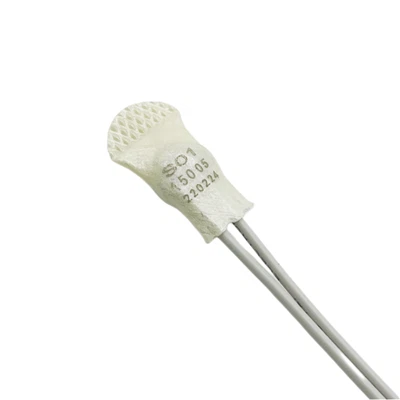
Thermal fuses provide protection against thermal damage or fires which may result from overcharging, overloads or other stresses. Unlike the over current fuses which opens up when the current exceeds the safe value, thermal fuses are designed to open when the surrounding temperature exceeds the normal levels.There are two types of thermal fuses namely the resettable and the non-resettable. Resettable thermal fuses – the resettable fuse disconnects the current at the preset temperature and then resets when the temperatures resumes to normal. The fuse is made of a temperature sensitive bimetallic strip which is usually closed during normal operation. When the temperature rises, one of the strips expands and bends away from the other one. This caused the contact to open, hence disconnecting the circuit and prevent further heating. Once the temperature goes down, the strips fall back together and current starts flowing again. Non-resettable thermal fuses – this is a one-time fusible link such as the electrical fuse and must be replaced every time it blows. This type of a fuse has temperature-sensitive link that melts due to the high temperature.
Thermistor
A temperature sensitive resistor such as the ptc whose resistor increased with temperature is used. These are usually mounted on the heat sink or very close to the component whose temperature is to be monitored. During normal operations, when the components are within the specified limits, the ptc has its normal resistance. Once the temperature starts to increase, the resistance increases such that it limits the amount of current flowing through the circuit. Some components such as ics have inbuilt thermal overload protection which turns off the ic when temperatures exceed the safe limits. The protection, mostly used in regulators, processors and other ics, prevents damage to the ic and circuit against excessive heating. The protection shuts down the ic such that the input is reduced until the temperature comes down. Typical voltage regulators with inbuilt thermal protection include lm 117, lm 137, lm 123 and others. The protection circuit monitors the ic temperature and shuts it down when it exceeds the safe level. Most of these will turn off at temperatures of about 170 degrees celsius, hence preventing damage that may result from the high temperatures. Thermal protection ensures that components such as ics, regulators are not destroyed by overloads, or over-temperature conditions arising from inadequate heat sinking.

Key Technologies in Battery Over-Temperature Protection
Passive cooling methods
Passive cooling mechanisms leverage the principles of thermodynamics to dissipate heat from battery modules without the need for external energy input. Heat sinks: Heat sinks are passive heat exchangers that facilitate the transfer of heat away from the battery cells to the surrounding environment. These metallic or composite structures feature extended surfaces to increase heat dissipation efficiency. Phase change materials (pcms): Pcms are substances capable of storing and releasing thermal energy during phase transitions, such as melting and solidification. When integrated into battery systems, pcms absorb excess heat during charging or high-demand scenarios and release it later as temperatures decrease, effectively regulating the thermal profile. Cooling fins: Cooling fins, also known as heat fins or radiator fins, enhance heat dissipation by increasing the surface area available for convective cooling. These fin-like structures are often attached to heat sinks or enclosures, facilitating efficient heat transfer to the surrounding air.
Active cooling systems
Active cooling solutions employ mechanical or refrigeration-based techniques to actively remove heat from battery modules, ensuring precise temperature control and optimal performance. These systems are particularly effective in high-demand or high-temperature environments. Key active cooling methods include: Air cooling: Air cooling systems utilize fans or blowers to circulate ambient air around battery modules, promoting convective heat transfer and maintaining temperature within predefined limits. This cost-effective approach is widely used in various applications, ranging from consumer electronics to electric vehicles. Liquid cooling: Liquid cooling systems employ coolant fluids, such as water or specialized refrigerants, to absorb and transport heat away from battery cells. This closed-loop system ensures efficient heat dissipation and temperature regulation, making it suitable for high-power or high-temperature applications where air cooling may be insufficient. Compression refrigeration: Compression refrigeration systems, commonly known as refrigeration units, utilize compressors, condensers, and evaporators to actively remove heat from battery modules. These sophisticated systems offer precise temperature control and can maintain sub-ambient temperatures if required, making them ideal for demanding industrial or automotive applications.
Over-Temperature Protection Sensitive Processes
1.Application
Processing of many materials requires tight temperature tolerances. Exceeding temperatures by as little as 5 to 10 degrees may be the difference between a properly processed material and material that must be scrapped. An example of this would be processing of chocolate or other dairy products that may scorch when overheated. Overheating of wax, oil or other emulsified materials can affect viscosity and mixing. Equipment may also require protection from excessive temperatures. Surfaces surrounding a heating application may need temperature monitor to prevent damage. For example, a customer was dissipating heat from a thermal process into the atmosphere. Their building was damaged when the excessive heat radiated up to an unmonitored surface and burned the paint on the ceiling. As a safety measure, a large chemical manufacturing plant requires all temperature controllers use a secondary high temperature limit controller. This is required on adjacent surfaces or on the processing equipment itself to monitor temperature uniformity.
2.Solutions
High temperature limit devices provide vital protection during thermal heating processes. These devices can cut power to temperature controllers/heaters in the event the maximum high-limit temperature is exceeded. This ensures product quality, reduces waste from poorly controlled product batches, can prevent damage to equipment, and adds to plant and worker safety. High temperature limit controller can be used with almost any electrical heating product, either with an integrated temperature controller or with a stand-alone temperature controller. The hl101 does not control the heating temperature, but rather ensures the temperature does not exceed a defined set-point. It utilizes a separate temperature sensor that is placed on the surface that needs to be monitored. It can also protect an adjacent surface from excessive radiant heat.
3.System integrations
Some applications require the accuracy and fast response of a pid controller. Controller is a great choice to use with all our heaters. These controllers and heaters feature “plug and play,” design, so simply plug the heater into the controller, the controller into the an electrical outlet.
There are several ways on how to do the task. It will vary from technician to technician, engineer to engineer or person to person.
Identify the hotspot area where you want to put the sensor/s. It is important that you are able to identify these hot spot locations so that the protection will serve its purpose. Set the OTP target trip point. Put in my mind that when this trip point is reached, there must be no devices that will get damage. Select the type of sensor you want to use. For boards, the economical solution is to use a NTC thermistor. Through-hole or surface mount could do (whichever preferable by the application). For system level, assembly type NTC could be used also.
Select the associated parts. Like selecting the comparator, the biasing resistors or you may add delay and bypass capacitors, or you may add a hysteresis. A hysteresis is a circuit that prevents two states to continuously keep changing. Perform calculations and simulations. The only way to ensure the design will work before making an actual sample is to do calculations and simulations.
Build actual circuit and perform testing. Building actual circuit could be expensive especially with multiple re-spins. To minimize the iterations, it is better to do your best in the calculations and simulations. In my case, I always perform detailed analysis and there is no more issue during actual circuit testing. Optimize the design. Once you have the actual sample and can do the test, you can optimize the circuit values. Implement the design for production or roll out.
Our factory
Our company was founded in 2011, in the past ten years, we have been focusing on the R&D and production of fuses, fuse holders and related fields . We are committed to improving the safety of circuits . With the unremitting efforts, our products become vital parts of all-round circuit protection. At the beginning, our factory just concentrated on R&D and production. Gradually, we set up special domestic trade and foreign trade departments, to make our products be known and recognized by more domestic and foreign customers. In this process, In the process, we strive to enrich our product line and sale various of electronic protection components. Our mission is to becoming the most professional circuit protection expert, providing customers with high-quality products and professional solutions. Increasingly mature technical and the industry's broadest and deepest circuit protection portfolio enables our products to cover Fuse, Fuse Holders, Blocks and Accessories, Circuit Breakers, Thermostat, NTC and etc. With rich product line, our products are widely applied to various electronic fields, from consumer electronics to motorcycles, automobiles, marine, industrial equipment and new energy fields , becoming key parts of the electric energy market.


video
Certificate

FAQ
We're well-known as one of the leading over-temperature protection manufacturers and suppliers in China. Please feel free to wholesale bulk over-temperature protection in stock here and get free sample from our factory. Quality products and low price are available.
Marine Rated Battery Terminal Fuse CFM, Manual Reset Type Circuit Breaker, Automatic Car Audio AGU Tube Fuse