


What Is Circuit Breaker
A circuit breaker is an electrical safety device designed to protect an electrical circuit from damage caused by current in excess of that which the equipment can safely carry (overcurrent). Its basic function is to interrupt current flow to protect equipment and to prevent fire. Unlike a fuse, which operates once and then must be replaced, a circuit breaker can be reset (either manually or automatically) to resume normal operation. Circuit breakers are commonly installed in distribution boards. Apart from its safety purpose, a circuit breaker is also often used as a main switch to manually disconnect ("rack out") and connect ("rack in") electrical power to a whole electrical sub-network.
Advantages of Circuit Breaker
Make enough electrical current available
Electrical current requirements for major appliances are far higher than those for lighting and other minor appliances. Your home’s electrical system would be immediately overloaded if you connected your dishwasher or electric range to a standard electrical outlet. You can make sure your device receives enough electrical current with a dedicated circuit without having to worry about overcharging the other outlets in your home.
Eliminate electrical safety risks
Installing dedicated circuits all around your house can help to keep your electrical system safe and secure. An appliance may put your home at risk for an electrical fire if it is connected to a standard circuit rather than a dedicated one. You’ll feel more at ease after your new appliances are installed if you invest in dedicated circuits.
Reusability
Unlike fuses, most circuit breakers can be reset after they trip, making them reusable.
Troubleshooting
They can also be used as a manual disconnect for troubleshooting and equipment maintenance.
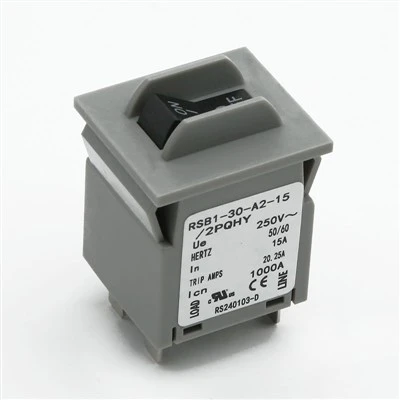


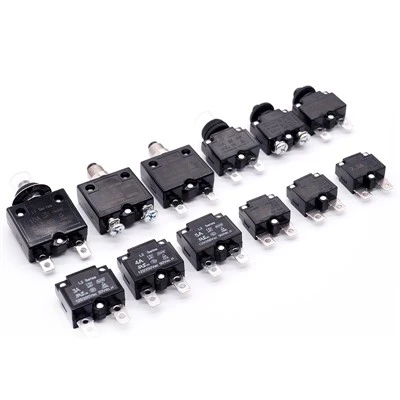
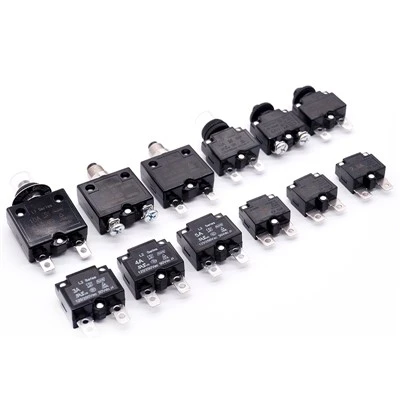
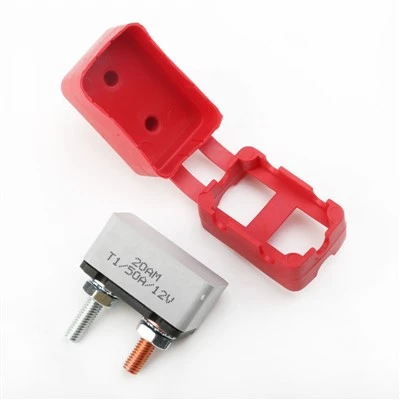
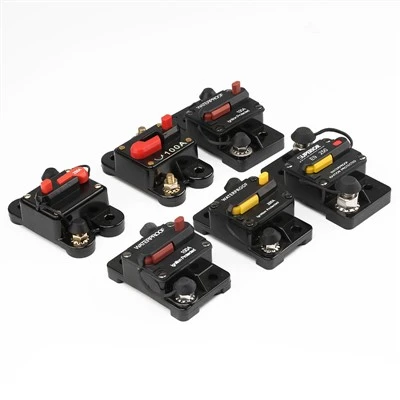
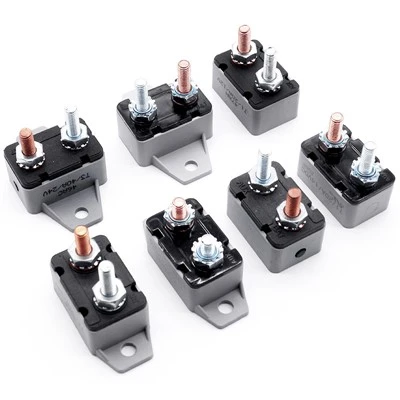
Product Categories
Latest Products


Why Choose Us
Our Factory
Our company was founded in 2011, in the past ten years, we have been focusing on the R&D and production of fuses, fuse holders and related fields . We are committed to improving the safety of circuits . With the unremitting efforts, our products become vital parts of all-round circuit protection. Our factory covers about 5,000 square meters and is equipped with 15 production lines and staffed with more than 125 skilled workers. Each month we can produce 3,000 million fuses, fuse holders and other products to meet clients' volume
demands.
Our Product
Increasingly mature technical and the industry's broadest and deepest circuit protection portfolio enables our products to cover Fuse, Fuse Holders, Blocks and Accessories, Circuit Breakers, Thermostat, NTC and etc.
Production Market
Our products are popular all over the world, especially in North America, Europe, South America, the Middle East and South Africa, having won unanimous praise from customers.
Our Service
In order to give customers the best purchasing experience, our sales team have undergone professional training, so they are very familiar with the specifications and performance of the products, and can give customers the most professional answers in the first time. From customer consultation to sample preparation, shipment, until the goods reach the customer, we will follow every link closely to give customers the most satisfactory service.
Types of Circuit Breakers
Miniature Circuit Breakers (MCBs)
These are the most common type found in homes. They protect your electrical circuits from overloads and short circuits. MCBs are equipped with two tripping mechanisms: the delayed thermal tripping mechanism for overload protection and the magnetic tripping mechanism for short circuit protection.
Molded Case Circuit Breakers (MCCBs)
Used in industrial settings, MCCBs handle higher currents and offer more robust protection. When selecting a circuit breaker, consider factors such as current ratings and trip characteristics to ensure it meets your specific needs.
Residual Current Circuit Breakers (RCCBs)
These protect against electrical leakage and are crucial for safety in wet environments like bathrooms.
Air Circuit Breakers (ACBs)
Typically used in large facilities and industries, ACBs can handle very high currents and offer advanced protection features. They are the best choice for heavy switching, and their contacts are replaceable.
Circuit breakers interrupt the flow of electrical current when it exceeds a predetermined amount, which is where a circuit breaker’s ratings come into play. Circuit breakers are rated based on the amount of current that they can safely carry and the amount they can safely interrupt. There are a few kinds of circuit breakers, but they all typically have these components in common.
Frame
The frame is the outer shell of a circuit breaker usually made up of molded insulating materials. This protects the components on the inside and anything on the outside of the breaker if a hazard occurs.
Terminal
The terminal is a block of metal with a bolt emerging on the outside of it. Wires that carry electrical current from the power supply, through the breaker, and to a load are connected here.
Lever
The lever (switch) is connected to the trip unit and allows a breaker to be flipped on or off. When a circuit breaker trips, the lever will be positioned in the middle to quickly identify which one needs troubleshooting.
Contacts
The contacts are two pieces of metal that move to close or open (interrupt) the circuit. One contact is attached to the actuator mechanism, while the other is connected to the main panel.
Actuator mechanism
The actuator mechanism is a metal arm inside the circuit breaker. One end is attached to the lever, and the other is attached to a contact. When the lever is flipped, the actuator mechanism forces the contacts together or pulls them apart.
Trip unit
A trip unit is a part that tells the breaker when to trip automatically in the event of an overload, short circuit, or fault.
Working Principle of Circuit Breaker
There are two essential contacts in a circuit breaker, and they are: Fixed contactas and moving contacts. When the circuit is closed, which is a normal condition, the contacts touch each other and carry the current under this condition. Under a closed circuit breaker, current-carrying contacts are known as electrodes that engage each other due to the pressure of a spring. The switching and maintenance of the system are taken care of by either opening or closing the arms of the circuit breaker. The circuit breaker is opened by applying pressure to the trigger. When there is a faulty current flowing through any part of the system, the trip coil of the breaker gets energized thereby moving away from each other, thus opening the circuit.

What Is a Circuit Breaker Used For?
Replacement of fuse
Compared to another switchgear-like fuse, a circuit breaker is smaller in size and can be automatically reset for repeated operation. Fuses are made up of metal and are placed in the circuit for protection. Whenever heavy current flows through the circuit, the fuse melts or blows up. A fuse can be used only one time and cannot be reset post-repair of faults in the circuit. Every time a new fuse must be added to the circuit for a one-time operation. Moreover, fuses have slow capabilities to determine the time to start operation and are used for low-voltage applications. On the other hand, circuit breakers are fast enough to operate in faulty conditions. A circuit breaker can be automatically reset post-repair of the circuit and ensures continuous supply. Using a circuit breaker instead of a fuse eliminates the cost of replacement, saves time, and enables high-voltage operation.
Circuit breaker as a switch
The circuit breaker can also act as a switch that manually turns on and turns off the power supply to electrical equipment in the power system. It can be used as a switch to manually turn on and turn off the supply for repair or replacement purposes. When power system components like transformers, coils, and other equipment or circuit breakers need to be repaired or replaced, a circuit breaker isolates those components. A circuit breaker breaks the current flowing to the device and disconnects the device for further procedures. Post repair or replacement, circuit breakers can be switched on for regular operation. A normal switch cannot be used in faulty conditions because it needs a manual turn-off. One cannot judge that the overcurrent flow has passed design limitations. Circuit breaker automatically “senses” overcurrent and breaks the circuit immediately.
Other applications of circuit breaker
Circuit breakers are used in switching different kinds of loads in households, commercial, buildings, and industrial places. Circuit breakers are used as switchgear to protect electrical equipment in household and commercial areas from faulty current, overcurrent, short-circuit, and fire. Circuit breakers are used in feeder circuits and motors.

There are two types of operating mechanisms, over toggle and two step stored energy.
1.Over toggle
The function of the operating mechanism is to provide a means of opening and closing the circuit breaker. This toggle mechanism is the quick-make, quick-break type, meaning that the speed with which the contacts snap open or close is independent of how fast the handle is moved. In addition to indicating whether the breaker is on or off, the operating mechanism handle indicates when the breaker is tripped by mobbing to a position midway between the on and off. Eaton’s residential, miniature and molded case circuit breakers utilize over-toggle mechanism.
2.Two step stored energy
The two-step stored energy mechanism is used when a large amount of energy is required to close the circuit breaker and when it needs to close rapidly. The major advantages of this mechanism are rapid reclosing and safety. Rapid reclosing is achieved by storing charged energy in a separate closing spring. Safety is achieved by providing remote charging of the spring. The two-step stored energy process is designed to charge the closing spring and release energy to close the circuit breaker. It uses separate opening and closing springs. This is important because it permits the closing spring to be charged independently of the opening process. This allows for an open-close-open duty cycle. The closing spring can be charged (or recharged) manually via a charging handle or electrically via a motor. The motor can be operated remotely, allowing maximum safety for the operator.
How to Choose a Circuit Breaker
Voltage rating
Circuit breakers available in different sizes & configurationsthe overall voltage rating is calculated by the highest voltage that can be applied across all end ports, the distribution type and how the circuit breaker is directly integrated into the system. It is important to select a circuit breaker with enough voltage capacity to meet the end application.
Frequency
Circuit breakers up to 600 amps can be applied to frequencies of 50-120 hz. Higher than 120 hz frequencies will end up with the breaker having to derate. During higher frequency projects, the eddy currents and iron losses causes greater heating within the thermal trip components thus requiring the breaker to be derated or specifically calibrated. The total quantity of deration depends on the ampere rating, frame size as well as the current frequency. A general rule of thumb is the higher the ampere rating in a specific frame size the greater the derating needed.
Maximum interrupting capacity
The interrupting rating is generally accepted as the highest amount of fault current the breaker control panel circuit breakerscan interrupt without causing system failure to itself. Determining the maximum amount of fault current supplied by a system can be calculated at any given time. The one infallible rule that must be followed when applying the correct circuit breaker is that the interrupting capacity of the breaker must be equal or greater than the amount of fault current that can be delivered at the point in the system where the breaker is applied. Failure to apply the correct amount of interrupting capacity will result in damage to the breaker.
Continuous current rating
In regards to continuous current rating, molded case circuit breakers are rated in amperes at a specific ambient temperature. This ampere rating is the continuous current the breaker will carry in the ambient temperature where it was calibrated. A general rule of thumb for circuit breaker manufactures is to calibrate their standard breakers at 104° f. Ampere rating for any standard application depends solely on the type of load and duty cycle. Ampere rating is governed by the national electrical code (nec) and is the primary source for information about load cycles in the electrical contracting industry. For example lighting and feeder circuits usually require a circuit breaker rated in accordance with the conductor current carrying capacity. To find various standard breaker current ratings for different size conductors and the permissible loads consult nec table 210.24.
Atypical operating conditions
When selecting a circuit breaker it is crucial to have in mind the end user location. Each breaker is different and some are better suited for more unforgiving environments. Below are a few scenarios to keep in mind when determining what circuit breaker to use:Weather proof control panels protect components.
High ambient temperature
If standard thermal magnetic breakers are applied in temperatures exceeding 104° f, the breaker must be derated or recalibrated to the environment. For many years, all breakers were calibrated for 77° f which meant that all breakers above this temperature had to be derated. Realistically, most enclosures were around 104° f; a common special breaker was used for these types of situations. In the mid-1960s industry standards were changed to make all standard breakers be calibrated with 104° f temperature in mind.
Maintenance and testing
Circuit breaker maintenance and repairwhen selecting a circuit breaker the user must decide to either buy a unit that is ul tested (underwriters laboratories) or not. For overall quality assurance it is recommended that customer purchase circuit breakers that have been ul tested. Be aware that non ul tested products do not guarantee correct calibration of the breaker. All low voltage molded case circuit breakers which are ul listed are tested in accordance with ul standard 489 which is divided up into two categories: Factory testing and field testing.
Our factory
Our company was founded in 2011, in the past ten years, we have been focusing on the R&D and production of fuses, fuse holders and related fields . We are committed to improving the safety of circuits . With the unremitting efforts, our products become vital parts of all-round circuit protection. At the beginning, our factory just concentrated on R&D and production. Gradually, we set up special domestic trade and foreign trade departments, to make our products be known and recognized by more domestic and foreign customers. In this process, In the process, we strive to enrich our product line and sale various of electronic protection components. Our mission is to becoming the most professional circuit protection expert, providing customers with high-quality products and professional solutions. Increasingly mature technical and the industry's broadest and deepest circuit protection portfolio enables our products to cover Fuse, Fuse Holders, Blocks and Accessories, Circuit Breakers, Thermostat, NTC and etc. With rich product line, our products are widely applied to various electronic fields, from consumer electronics to motorcycles, automobiles, marine, industrial equipment and new energy fields , becoming key parts of the electric energy market.


video
Certificate

FAQ
We're well-known as one of the leading circuit breaker manufacturers and suppliers in China. Please feel free to wholesale bulk circuit breaker in stock here and get free sample from our factory. Quality products and low price are available.
