


What Is Fuse
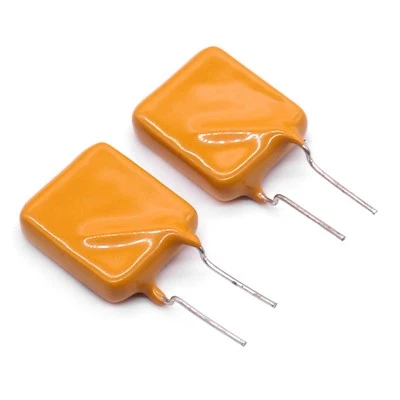
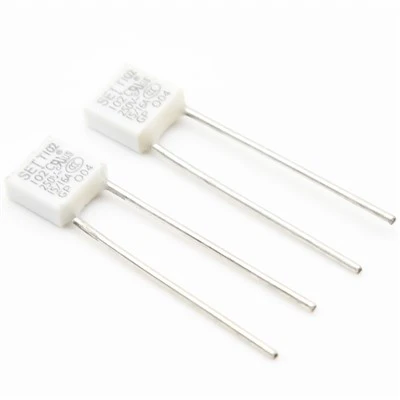
A fuse is an electrical component designed to protect electrical circuits by safely opening the circuit under abnormally high current loads. Fuses come in many shapes and sizes, but each one is designed to protect a circuit with a specific set of electrical parameters. These parameters are primarily the operating voltage, operating current and fuse element melting time or speed of the fuse. A fuse is an electrical safety device that protects an electric circuit from excessive electric current. Fuses are destroyed during overload conditions. When reasonable to do so (and economically sensible), circuit breakers are used instead because they are not destroyed during overload conditions.
Advantages of Fuse
Cost-effective
Fuses are cost-effective compared to other protective devices such as circuit breakers, making them a cost-less solution for overcurrent protection.
Fast response time
Fuses provide quick protection against electrical defects by rapidly interrupting circuit current in the case of an overcurrent condition.
Compact size
Due to their compact size, fuses can be installed inside of electrical equipment or in tight spaces.
Low maintenance
Fuses do not require regular maintenance or servicing, reducing operational costs and ensuring hassle-free operation once installed.


Product Categories
Latest Products



Why Choose Us
Our Factory
Our company was founded in 2011, in the past ten years, we have been focusing on the R&D and production of fuses, fuse holders and related fields . We are committed to improving the safety of circuits . With the unremitting efforts, our products become vital parts of all-round circuit protection. Our factory covers about 5,000 square meters and is equipped with 15 production lines and staffed with more than 125 skilled workers. Each month we can produce 3,000 million fuses, fuse holders and other products to meet clients' volume
demands.
Our Product
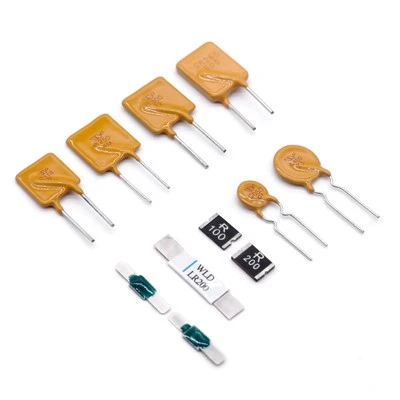
Increasingly mature technical and the industry's broadest and deepest circuit protection portfolio enables our products to cover Fuse, Fuse Holders, Blocks and Accessories, Circuit Breakers, Thermostat, NTC and etc.
Production Market
Our products are popular all over the world, especially in North America, Europe, South America, the Middle East and South Africa, having won unanimous praise from customers.
Our Service
In order to give customers the best purchasing experience, our sales team have undergone professional training, so they are very familiar with the specifications and performance of the products, and can give customers the most professional answers in the first time. From customer consultation to sample preparation, shipment, until the goods reach the customer, we will follow every link closely to give customers the most satisfactory service.
AC fuses
AC fuses are specifically designed for use with alternating current circuits. They are more resistant to electric arcs when the fuse blows than DC fuses and more compatible with standard voltage power supplies. They can usually cope with higher voltages, too.
DC fuses
DC fuses, by contrast, are used with direct current circuits. Quoted voltage ratings for these fuses are maximums that should not be exceeded.
Cylindrical fuse types
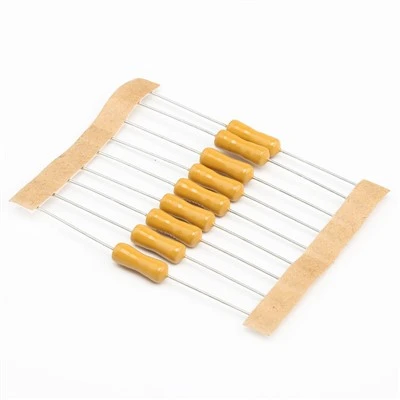
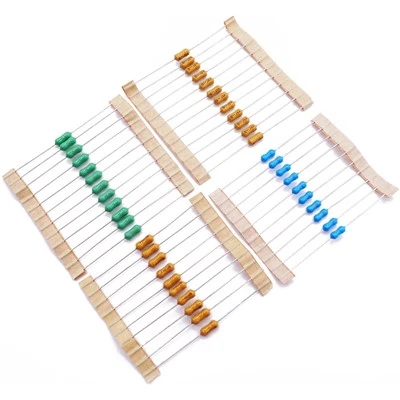
Cylindrical fuses are a basic design and many of the most widely used and familiar models fall within this category.
HRC fuse types
HRC Fuse Types High rupturing capacity (HRC) fuses feature a transparent capsule around the central resistor. This capsule is typically made from a type of rugged ceramic material called steatite, although epoxy resins are now also used.
Car fuses
Fuses for cars function as protective devices for the many electrical components in modern vehicles. There are different types of automotive fuse. The most widely used are blade fuses. These feature one or more blades that are inserted into a plug, making them easy to remove and reinsert. Six different sizes are available.
SMD fuses
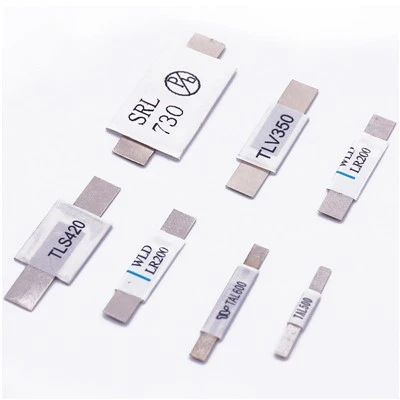
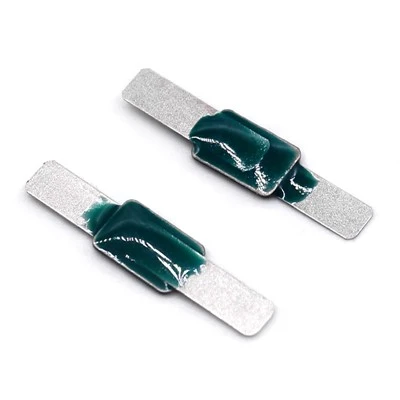
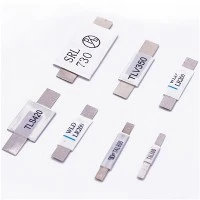
Surface mount devices (SMDs) are electrical components that sit on the surface of printed circuit boards (PCBs). SMD fuses are available in both resettable and non-resettable forms. Non-resettable SMD fuses function like other types. The internal resistor melts, breaking a circuit if over-current or short circuits occur. Once they have blown, they must be replaced. Different sizes, current and temperature ratings are available and they are made from various materials including ceramic and thermoplastics.Resettable SMD fuses, by contrast, can be used multiple times. They function in a similar way to resettable thermal fuses and are available in multiple sizes and capacities.
Striker fuses
Striker fuses are fuses fitted with a spring-loaded striking device that can trip adjacent switches and also indicate that a fuse has blown.
Type C fuses
A Type C fuse is actually a type of miniature circuit breaker (MCB). MCBs are a type of circuit breaker used with lower-powered circuits to cut off current in the event of an overload. Type C fuses trip circuits when the current exceeds the rated one by between five and ten times - i.e. at 100-500 amps for a 20amp device.
Type D fuses
The definition of a D-type fuse is a miniature circuit breaker that trips when the current exceeds the rated level by between ten and 20 times. Therefore, a 16 amp Type D breaker will trip if the current reaches between 160 and 320 amps.
Type F fuses
F type fuses are also known as quick blow or fast-blow fuses. These are highly responsive to excess current. They typically feature a glass tube with metal caps.
The Importance of Fuses and How They Work
Fuses are used for the prevention of home appliances from the short circuit and damage by overload or high current etc. If we don’t use fuses, electrical faults occur in the wiring and it burns the wire and electric appliances and may starts fire at home. The lives of television, computers, radios and other home appliances may also put at risk. When the fuse goes, a sudden spark occurs which may lead to turning your home into sudden darkness by disconnecting the power supply which saves any further mishappenings. That’s why we need fuses to protect our home appliances from harm.
The fuses work on the principle of the heating effect of the current. It’s made up of thin strip or strand of metallic wire with noncombustible material. This is connected between the ends of the terminals. Fuse is always connected in series with the electrical circuit. When the excessive current or heat is generated due to heavy current flows in the circuit, the fuse melts down due to the low melting point of the element and it opens the circuit. The excessive flow may lead to the breakdown of wire and stops the flow of current. The fuse can be replaced or changed with the new one with suitable ratings. The fuse can be made up of the element like zinc, copper, silver &aluminum. They also act as a circuit breaker which is used to break the circuit when the sudden fault occurs in the circuit. This is not only a protector but it is also used as a safety measure to prevent humans from hazards.

What to Know About Fuse Ratings
Fuses are primarily rated, as one might expect, in the unit for current: amps. Although their operation depends on the self-generation of heat under conditions of excessive current by means of the fuse’s own electrical resistance, they are engineered to contribute a negligible amount of extra resistance to the circuits they protect. This is largely accomplished by making the fuse wire as short as is practically possible. Just as a normal wire’s ampacity is not related to its length (10-gauge solid copper wire will handle 40 amps of current in free air, regardless of how long or short of a piece it is), a fuse wire of certain material and gauge will blow at a certain current no matter how long it is. Since length is not a factor in current rating, the shorter it can be made, the less resistance it will have end-to-end.
However, the fuse designer also has to consider what happens after a fuse blows: the melted ends of the once-continuous wire will be separated by an air gap, with full supply voltage between the ends. If the fuse isn’t made long enough on a high-voltage circuit, a spark may be able to jump from one of the melted wire ends to the other, completing the circuit again. Consequently, fuses are rated in terms of their voltage capacity as well as the current level at which they will blow.
Some large industrial fuses have replaceable wire elements, to reduce the expense. The body of the fuse is an opaque, reusable cartridge, shielding the fuse wire from exposure and shielding surrounding objects from the fuse wire.There’s more to the current rating of a fuse than a single number. If a current of 35 amps is sent through a 30 amp fuse, it may blow suddenly or delay before blowing, depending on other aspects of its design. Some fuses are intended to blow very fast, while others are designed for more modest “opening” times, or even for a delayed action depending on the application. The latter fuses are sometimes called slow-blow fuses due to their intentional time-delay characteristics.
On the other end of the fuse action spectrum, there are so-called semiconductor fuses designed to open very quickly in the event of an overcurrent condition. Semiconductor devices such as transistors tend to be especially intolerant of overcurrent conditions, and as such require fast-acting protection against overcurrents in high-power applications.
Although overcurrent protection placement in a circuit may determine the relative shock hazard of that circuit under various conditions, it must be understood that such devices were never intended to guard against electric shock. Neither fuses nor circuit breakers were designed to open in the event of a person getting shocked; rather, they are intended to open only under conditions of potential conductor overheating. Overcurrent devices primarily protect the conductors of a circuit from overtemperature damage (and the fire hazards associated with overly hot conductors), and secondarily protect specific pieces of equipment such as loads and generators (some fast-acting fuses are designed to protect electronic devices particularly susceptible to current surges).
Important Factors in Selecting a Fuse


Rated current
A fuse link can handle a certain level of current under normal conditions, which is given by the manufacturer as rated current. In most situations, it is designed conforming to an iec standard, and maximizing the load to 100% of the fuse link’s nominal rating can reduce its expected life. Therefore, you should make sure that the fuse load doesn’t go beyond the nominal value.
Ambient temperature
The ambient temperature refers to the temperature of the air in the immediate vicinity of the fuse. As the ambient temperature fluctuates, the capacity of a fuse to carry current changes as well. The fuse’s life may be shortened if it is operated at high ambient temperatures. Lower ambient temperatures, on the other hand, can result in a longer fuse life.
Time current features
As we already know, there are various kinds of fuse links categorized according to different parameters; one of them being the speed at which they blow. When exposed to high levels of current, fast-acting fuses will melt quickly and disrupt the circuit. Whereas, time-delay fuse links use a flow-delay mechanism. They are built to withstand overload pulses in the beginning. The control circuit’s need will determine which fuse links to employ. Inductive and capacitive loads are often protected by time-delay fuses, while resistive loads are protected by fast-acting fuses.
Maximum fault current
The necessary interrupting capacity of overcurrent protection devices are determined by maximum fault currents. For the fuse links to work successfully, its interrupting rating must equal or surpass the circuit’s maximum fault current.
Rated voltage
Similar to the rated current, the manufacturer specifies different rated voltages for different fuse links. So long as the voltage is below or equivalent to the rated voltage, a fuse can effectively terminate its rated short circuit current.
Pulses
Electrical pulse conditions differ a lot from one operation to the next. It is highly probable that different fuse link designs may behave differently to the same pulse circumstance. Thermal cycling and possibly mechanical strain are caused by electrical pulses, resulting in a shortened fuse link’s life. The starter pulse requirements must also be met by the fuse’s nominal melting i2t rating. The power needed to melt the fusing element is measured in nominal melting i2t. Fuses with a thermal delay design can withstand initial or starting pulses, which are common in some applications, while still protecting against continuous overload. The starting pulse should be defined and compared to the i2 t rating and time-current curve of the fuse.
How Do You Change a Fuse in an Old Fuse Box?
Despite their everyday name, domestic fuse boxes now typically contain circuit breakers rather than fuses, and they are more formally known as consumer panels. However, if your property still contains a traditional model, here is how to go about changing the wire in a fuse if it blows and cuts the power to one of the circuits that run through the building.
Obtain the tools you will need - typically fuse wire, wire cutters, a screwdriver and a torch so you can see what you are doing. Inspect the electrical appliances in the affected area. Make sure that the fault was not triggered by a cartridge fuse blowing in one or more plugs or wall sockets. If you replace a fuse in the fuse box without first replacing the blown fuse in the plug, the former will simply blow again. Once you have replaced any necessary powerpoint fuses, locate your fuse box, using your torch if necessary. Ensure that the master switch is in the off position. It should be following a trip, but you should always make sure that this is the case. Identify the blown fuse.
If in doubt, remove each fuse and inspect the fuse wire. Ensure you have the correct replacement fuse wire. It must have exactly the same amp rating as the wire you are replacing. A typical rating for a light circuit is 5 amps and for wall sockets, 30 amps. Replacing the blown fuse wire with one that has a higher rating could cause a fire. Loosen the screws at each end of the affected fuse and carefully remove the damaged wire. Insert the new wire, threading this through the central component of the fuse (normally made from porcelain). Wrap the wire around both screws, removing any excess, then tighten them back into place with your screwdriver.
Preventive Maintenance of Fuses
Improper fuse
Preventive maintenance of fuses consists of checking for the following conditions and correcting anydiscrepancies. Check the fuse installed against that recommended in the technical manualfor the equipment. If an incorrect fuse is installed, replace it with the correct fuse.
Corrosion
Check for corrosion on the fuseholder terminals or the fuse itself. If corrosion ispresent, remove it with fine sandpaper.
Improper fit
Check for contact between the fuse and fuseholder. If a piece of paper will fitbetween the fuse and the clips on a clip-type fuseholder, there is improper contact. If the fuse isnot held in the cap of a plug-type fuseholder, the contacts are too loose.
Open fuses
Check fuses for opens. If any fuse is open, repair the trouble that caused the openfuse and replace the fuse.
Our factory
Our company was founded in 2011, in the past ten years, we have been focusing on the R&D and production of fuses, fuse holders and related fields . We are committed to improving the safety of circuits . With the unremitting efforts, our products become vital parts of all-round circuit protection. At the beginning, our factory just concentrated on R&D and production. Gradually, we set up special domestic trade and foreign trade departments, to make our products be known and recognized by more domestic and foreign customers. In this process, In the process, we strive to enrich our product line and sale various of electronic protection components. Our mission is to becoming the most professional circuit protection expert, providing customers with high-quality products and professional solutions. Increasingly mature technical and the industry's broadest and deepest circuit protection portfolio enables our products to cover Fuse, Fuse Holders, Blocks and Accessories, Circuit Breakers, Thermostat, NTC and etc. With rich product line, our products are widely applied to various electronic fields, from consumer electronics to motorcycles, automobiles, marine, industrial equipment and new energy fields , becoming key parts of the electric energy market.


video
Certificate

FAQ
We're well-known as one of the leading fuse manufacturers and suppliers in China. Please feel free to wholesale bulk fuse in stock here and get free sample from our factory. Quality products and low price are available.
