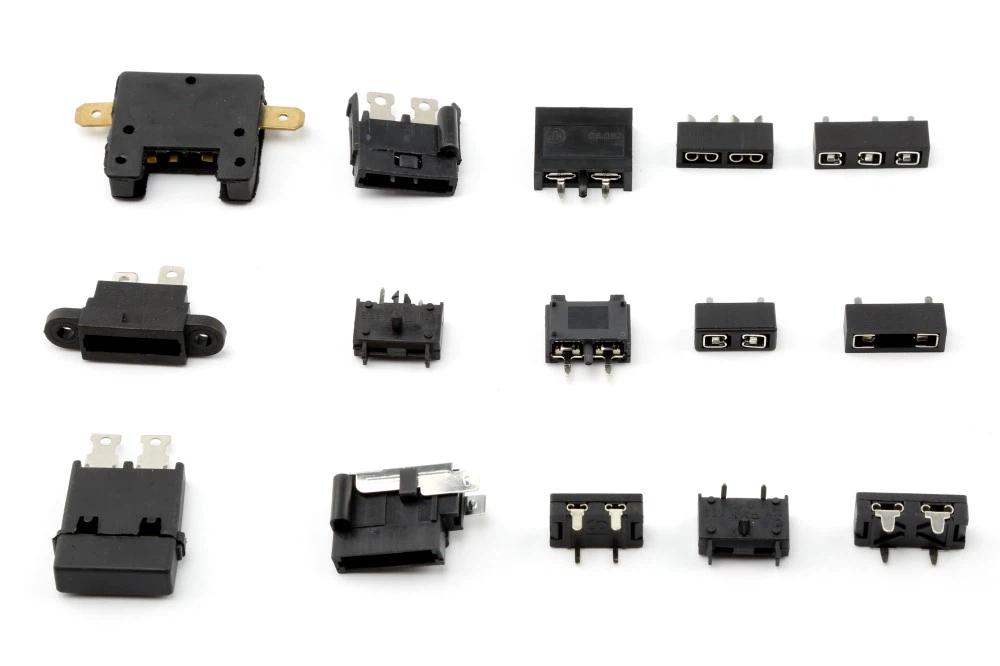
Overview of Various Types and Classifications of Standard Blade Fuse Holders
Let's take an overview of the various types and classifications of standard blade fuse holders used in automotive and other applications. Here's a summary of the main points:
Classification by Installed Fuse Type: Fuse holders can be categorized based on the type of fuse they accommodate, including standard blade fuse holders and fuse tube holders. Standard blade fuse holders are commonly used in automotive applications.
Classification by Fuse Size: Fuse holders come in different sizes to match the dimensions of the fuses they hold. Common sizes include large, medium, and small fuse holders.
Classification by Material: Fuse holders are constructed from different materials, such as plastic and bakelite. The choice of material can depend on factors like cost, durability, and environmental considerations.
Environmental Protection: Some fuse holders are designed to meet environmental standards, such as RoHS compliance, making them more suitable for applications with specific environmental requirements.
Installation Method: Fuse holders can be categorized based on their installation method. This includes lead-type fuse boxes, which are often used in wiring harnesses, and circuit board-type fuse holders, which are mounted on control boards.
Commonly Used Models: The commonly used models of fuse holders are mentioned, with specific sizes like 5x20mm and 6x30mm for fuse holders.
Automotive Fuse Holder Types: Automotive fuse holders are further divided into small, medium, and large insert fuse holders. These are designed to accommodate different sizes of blade fuses commonly found in automotive applications.
Selection Criteria: The selection of a fuse holder depends on factors like installation size, fuse size compatibility, shape, and performance. It's crucial to choose a fuse holder that suits the specific requirements of the application.